Field guide
Meet the intruders.
Two families live inside us. Worms are real animals with a mouth and a gut. They don't multiply inside you, the crowd grows when you keep catching more. Single cells are microscopic and multiply fast. Eight common guests, here's who they are.
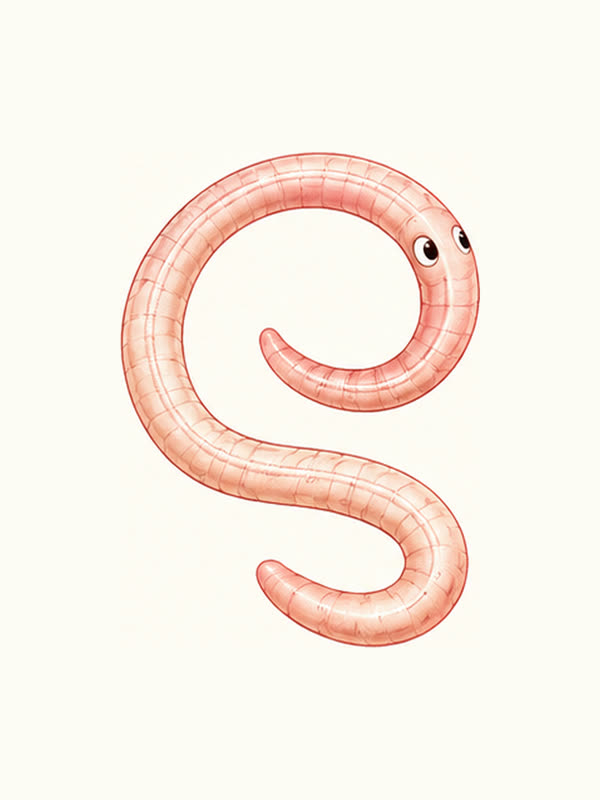
The Freeloader
Roundworm · Ascaris lumbricoides
Eats from your plate. Brings the whole family.
About
The most common worm on the planet. About 819 million people carry him, 7 in 10 in Asia. His eggs wait in the soil and ride in on unwashed veg and hands. Mostly a silent drain. In kids, he takes food and growth.
Superpowers
Eats before you do
Swims in your gut and feeds on your last meal.
Lung tour
As a baby he rides your blood to the lungs, makes you cough, and gets swallowed back down.
Egg factory
One female lays up to 200,000 eggs a day.
Takes the good stuff
Vitamin A, protein, lactose. Gone before you absorb them.
Size & crowd
Size
15 to 35 cm
A pencil
Crowd
Light 1 to 10 · Moderate 10 to 50 · Heavy 100+
Lives for
1 to 2 years
Symptoms
How you meet him: Eggs in soil, on unwashed veg and hands
What he hates
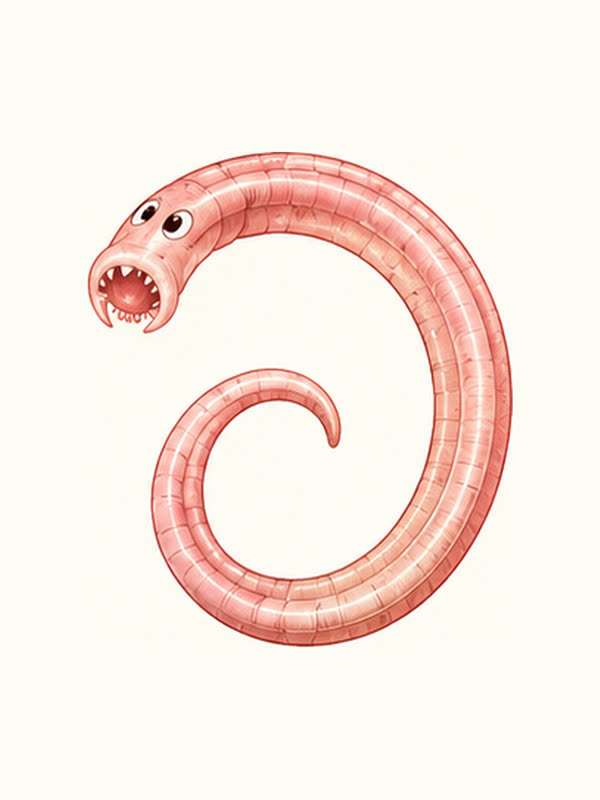
The Vampire
Hookworm · Necator, Ancylostoma
Walks in barefoot. Bites. Drinks. Numbs the pain.
About
About 439 million carriers, most in Asia. He waits in warm, damp soil and sand for bare feet. Then he drains you slowly: blood, iron, energy. The tiredness that no sleep fixes.
Superpowers
Walks in through your skin
Bare feet on warm soil is all he needs.
A mouth full of daggers
Rings of teeth that grip and cut into your gut wall.
Anti-clotting spit
Keeps the wound open while he drinks.
Calms your bodyguards
Dials down your immune system so he can stay for years.
Size & crowd
Size
8 to 13 mm
An eyelash
Crowd
Light under 25 · Moderate 25 to 100 · Heavy hundreds
Lives for
Several years
Symptoms
How you meet him: Larvae in warm soil and sand, through bare skin
What he hates
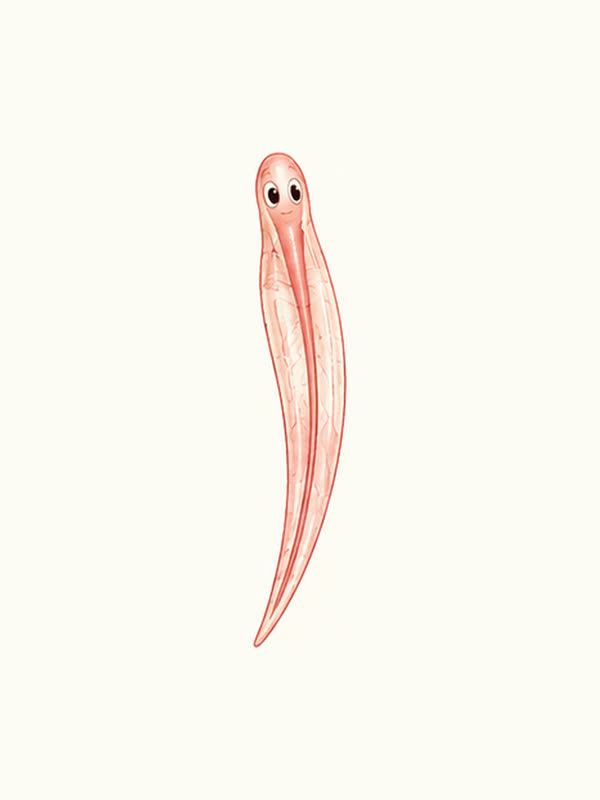
The Itch Queen
Pinworm · Enterobius vermicularis
Holds court at night. Gets the whole house itching.
About
The most common worm in Europe and the US. Kids bring her home, then she does the rounds: siblings, parents, sheets, sofa. Rarely harmful. Very good at coming back.
Superpowers
Night shift
She crawls out at night to lay about 10,000 eggs on your skin.
The itch is the plan
You scratch, eggs go under your nails, then back into your mouth.
Family pack
Eggs on sheets, towels and toys. One case is the whole house.
Size & crowd
Size
8 to 13 mm
A staple, or a white thread
Crowd
A few dozen to hundreds
Lives for
About 2 months, and she reinfects easily
Symptoms
How you meet him: Hands, bedding, kids, house dust
What she hates
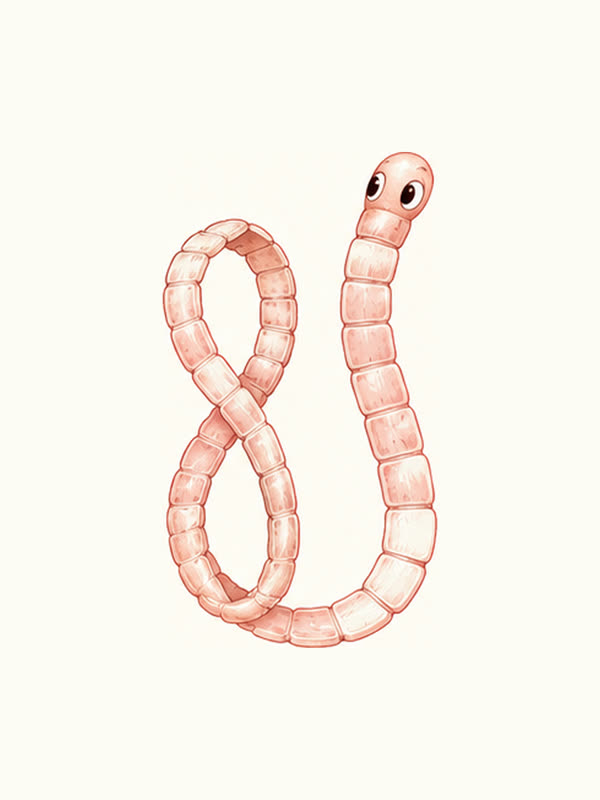
The Lone Glutton
Tapeworm · Taenia, fish tapeworm
No mouth, no eyes. Moves in alone and eats for years.
About
The French call him ver solitaire, the solitary worm. Usually one per person, metres long, quiet for years. Beef and pork tapeworm are both on the books in Bali. He comes with undercooked meat. His cousin comes with raw fish.
Superpowers
Eats through his skin
No mouth, no gut. He absorbs your food straight through his body.
Builds himself
Thousands of segments, each one full of eggs.
B12 thief
His fish cousin can leave you anaemic.
Patient
Stays for years, sometimes decades.
Size & crowd
Size
2 to 10 metres
A garden hose
Crowd
Usually just 1. Rarely 2 or 3
Lives for
Years, up to 25 for beef tapeworm
Symptoms
How you meet him: Undercooked beef, pork, raw fish
What he hates
Pork tapeworm eggs can reach muscles and the brain. Confirmed pork tapeworm needs a doctor.
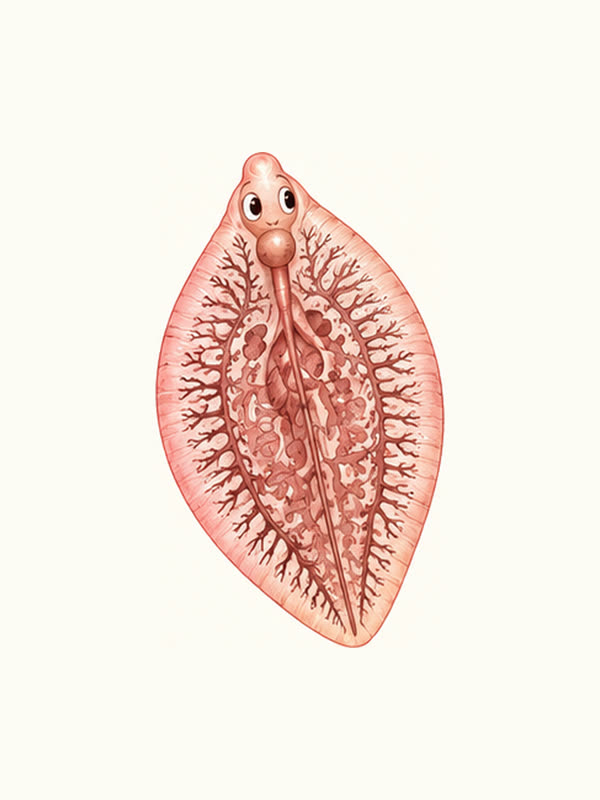
The Bile Duct Lord
Liver fluke · Opisthorchis, Clonorchis
Takes the throne in your liver. Rules for 20 years.
About
A South-East Asian specialist. About 1 in 10 people in Thailand carry him, plus Laos, Vietnam and Cambodia. He comes with raw or fermented freshwater fish. Decades of quiet damage: the WHO lists him as a cause of bile duct cancer.
Superpowers
Takes the throne
Climbs up into your bile ducts and settles in.
Suckers and armour
Holds tight and survives bile that digests most things.
Patience
Lives 20 years and more.
Slow sabotage
Years of irritation inflame and scar the ducts.
Size & crowd
Size
5 to 25 mm
A sesame seed to a grain of rice
Crowd
Tens to hundreds · Heavy 1,000+
Lives for
20+ years
Symptoms
How you meet him: Raw or fermented freshwater fish
What he hates
Confirmed liver fluke needs a doctor. A herbal cleanse alone is not enough.
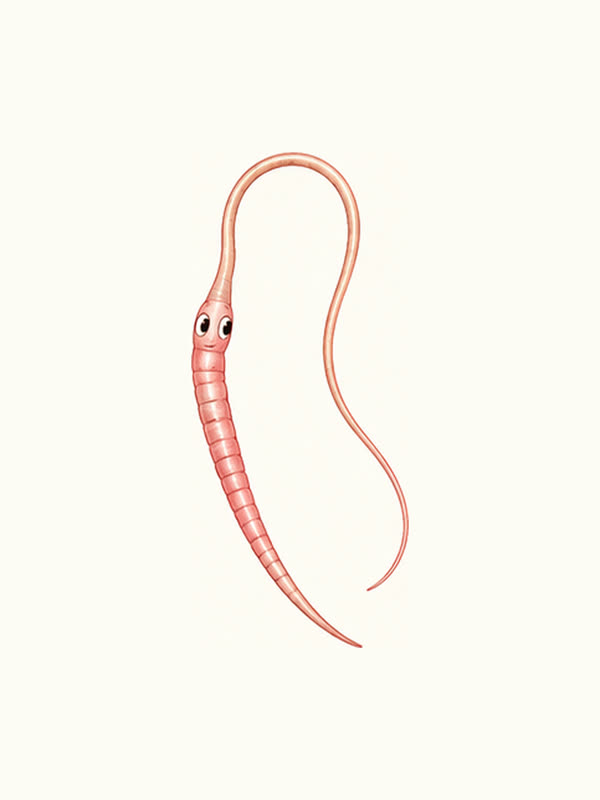
The Clinger
Whipworm · Trichuris trichiura
Buries his head in your gut wall and won't let go.
About
About 465 million carriers, many in South-East Asia. Third of the big soil worms, same door as the Freeloader: soil, veg, hands. Light loads stay quiet. Heavy ones inflame the gut and drain iron.
Superpowers
Buries his head
His thin, whip-like front end tunnels under your gut lining.
Grazes in place
Feeds on the lining, right where he's anchored.
Hard to evict
One of the most stubborn worms to clear.
Size & crowd
Size
3 to 5 cm
A paperclip wire
Crowd
Light under 50 · Heavy hundreds
Lives for
1 to 3 years
Symptoms
How you meet him: Eggs in soil, on unwashed veg and hands
What he hates
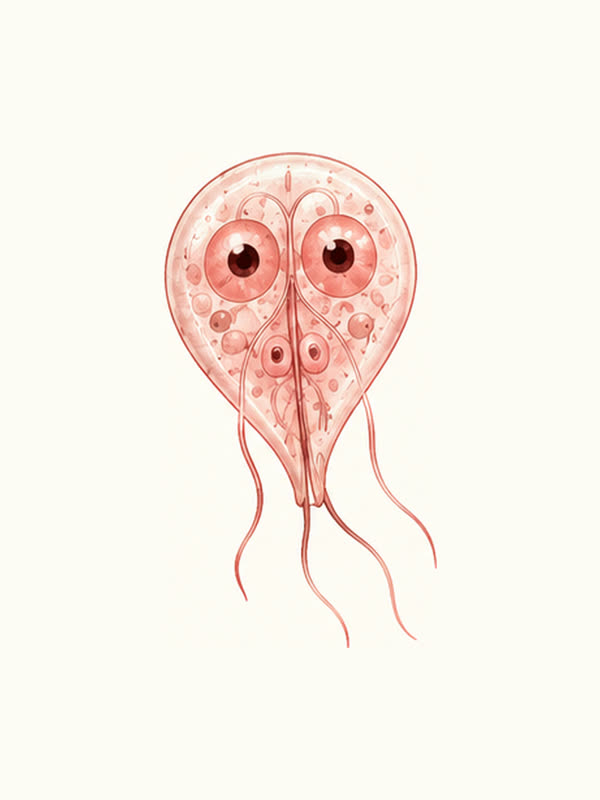
The Master of Disguise
Giardia · Giardia duodenalis
Changes costume every time your immune system gets close.
About
One of the most common waterborne gut bugs on Earth. Comes with water, ice, salads and other people. Ten cysts can be enough to start an infection, and your gut can stay touchy long after he's gone.
Superpowers
Costume change
Keeps swapping his outer coat so your immune system loses track.
Suction cup
Sticks to your gut wall with a sucker disc.
Carpet bomber
Covers the lining so fats and dairy pass through undigested.
Chlorine-proof
His cysts shrug off treated tap water.
Size & crowd
Size
10 to 20 µm
Microscopic. 5 fit across a hair
Crowd
Billions
Lives for
Weeks to months
Symptoms
How you meet him: Water, ice, salads, other people
What he hates
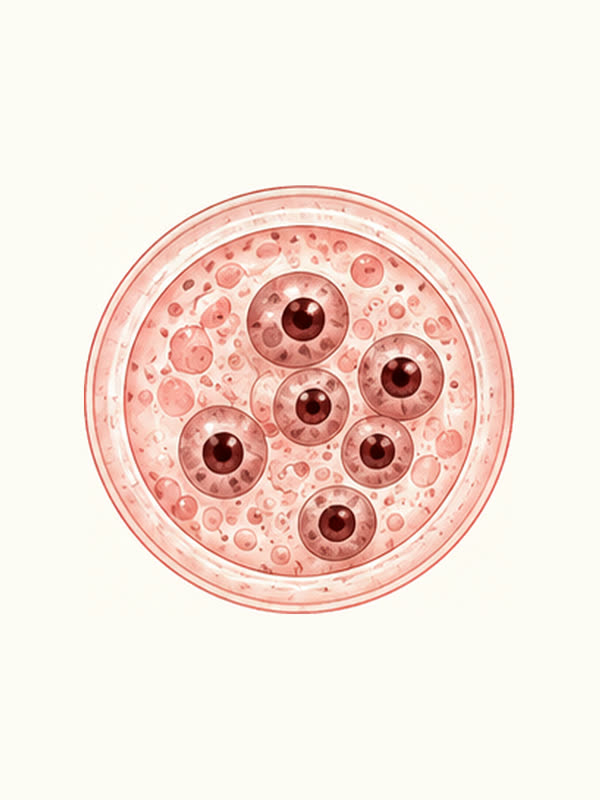
The Shapeshifter
Amoeba · Entamoeba histolytica
No fixed shape. Melts tissue. Hides for months.
About
His Latin name means tissue dissolver. Behind a lot of "Bali belly". Most carriers feel nothing, and that's the trick. When he goes deep: dysentery, and sometimes the liver.
Superpowers
Shapeshifter
No fixed shape. He flows to move.
Tissue dissolver
Melts into your gut lining.
Cell eater
Swallows your cells, red blood cells included.
Road trip
Can travel through the blood to your liver.
Size & crowd
Size
15 to 60 µm
Microscopic
Crowd
Millions
Lives for
Months, and he can sit there silently
Symptoms
How you meet him: Contaminated water and food
What he hates
Blood in the stool means doctor, not detox.
On the bench
The Puppeteer
Toxoplasma
Makes infected rats lose their fear of cats. What it does to humans is still debated.
The Sushi Hitchhiker
Anisakis
Rides in raw fish and squid. Freezing the fish kills him.
The Loop
Strongyloides
Re-infects you from the inside and can stay for decades. Doctor territory.
The Grey Zone
Blastocystis
Lives in lots of healthy guts. Science is still debating if he's harmful.
Blood in stool, fever, yellow skin or eyes, strong pain, weight loss? See a doctor first.
Sources: WHO 2023; Pullan et al. 2014; CDC DPDx; IARC; Bali taeniasis surveys 2002 to 2009. Crowd sizes are typical ranges, not a diagnosis.